

To whom it is about to concern,
AT A GLANCE
- Hybrid Data Centers Enable Scalable & Flexible Automation: Enterprises are quickly moving to hybrid, cloud-based data centers. This allows workloads to scale while keeping sensitive data secure on-prem. Cloud adoption is essential for automation efficiency and business agility.
- SaaS Adoption Boosts Productivity & Cost Efficiency: SaaS cuts infrastructure costs. It also shifts IT from maintenance to innovation. This boosts competitiveness. Moving from CapEx to OpEx models provides financial flexibility.
- Multi-Vendor & Multi-Cloud Automation is the Future: With enterprises using Airflow, AWS Batch, Databricks, Google Cloud, and Azure, automation must be vendor-agnostic. It must support Python workflows, integrations, and seamless orchestration across platforms.
- Unified Workflow Automation Simplifies Complexity: Broadcom’s Automation Marketplace and AAI offer a single view, predictive alerts, and integration with modern data pipelines. They enable seamless automation across cloud, on-prem, and AI-driven environments.
FULL TEXT
The Data Center is disappearing, and so will you if you don’t disappear yours, said Dave Kellermanns (Global Advisor – Broadcom Automation) at Broadcom’s Annual Virtual Automation Summit.
Like me, Kellermanns‘ been with Automic Automation for twenty-five years. And I agree. So, permit me to recap his brilliance.

Businesses are running full-speed toward the cloud – whether private, public, or some combination of both, allowing applications to grow, shrink, and change at will, like my muscles after a visit to the gym.
“Resources are spun down in one location, and they’re easily spun up in another. Applications that are traditionally always on premises, such as an ERP system or data lake will suddenly become cloud-based overnight,” said Kellermanns.
What does all this mean for enterprise automation?
The business is pushing for hybrid data centers, and you better be too.

Business needs change quicker than trends on TikTok. I mean, we’re talking to people where, “We need it done yesterday” isn’t just a catchphrase, it’s their way of life.
By the way, I hate that catchphrase. Why not just say, “Get your sh*t done?”
The other thing is, hybrid data centers allow for bipolar-levels of flexibility, scalability, and speed.
Remember the agonizing wait after requesting a server?
When I consulted, I remember waiting an entire month for a database – a simple database to be created – and instead of wasting the entire month, I wrote a program to do check-ins and check-outs for changes, and there’s where ACCE was born, our lifecycle management add-on for AutoSys.
Those days are fading, and cloud services are instant gratification at its finest. Your kids would be proud.
When your workload spikes, like during month-end processing, you can scale up your resources without breaking a sweat – or an SLA. Plus, you still get to lock down sensitive data on-premises while enjoying the cloud’s juicy benefits like geo-location and processing power.

Now, is SaaS cheaper?
Yes, dollar-for-dollar, I believe that moving to SaaS reduces costs.
But what’s immeasurable is the productivity gains you get by not doing repeatable processes.
Ask yourself this question, “what if I could use this person for the greater good of my company? Is it worth it?”
That in its own right makes it a much wiser financial decision.
Instead of having your people doing mundane processes, they can be more productive doing things that help the organization become more competitive and drive more revenue.
Our clients also appreciate the shift in terms of moving from those big one-time capital expenses to pay-as-you-go operational costs.
It feels more flexible, right?
Automation Challenges: One serenades your soul, the other moves your body

With a hybrid data center, you still have your old pals: the ERP systems and data lakes that stay on-prem. They’re like Barbra Streisand: evergreen.
But now you’re also dealing with a lot of Lizzo-like cloud tools and technologies – pure energy, spontaneity, and empowerment, blasting through the barriers hindering development and getting everyone on their feet.
Tools like Airflow, AWS Batch, and Databricks are popping up everywhere, and you can’t be tied to one vendor. You might have a team that loves Google Cloud, while another swears by Azure. Just like your desire to listen to different genera of music, you better be ready for the different genera of technology – a multi-vendor, multi-tech, multi-fueled approach to automation.

A lot will stay samsies: SLAs, incident management, and object promotions – moving workflows from dev, through QA, Test, and Prod like the rockstar you are. But with cloud technologies, new pizzaz means new requirements.
Developers are going to love their spicy new tools, so they’ll automate directly within them. And in the world of the citizen developer, people will build their own little automation silos like tech bunkers.
And let’s not forget, today’s developers are coding in Python like it’s the only language left on Earth.
Dependencies? Python.
Triggers? Python.
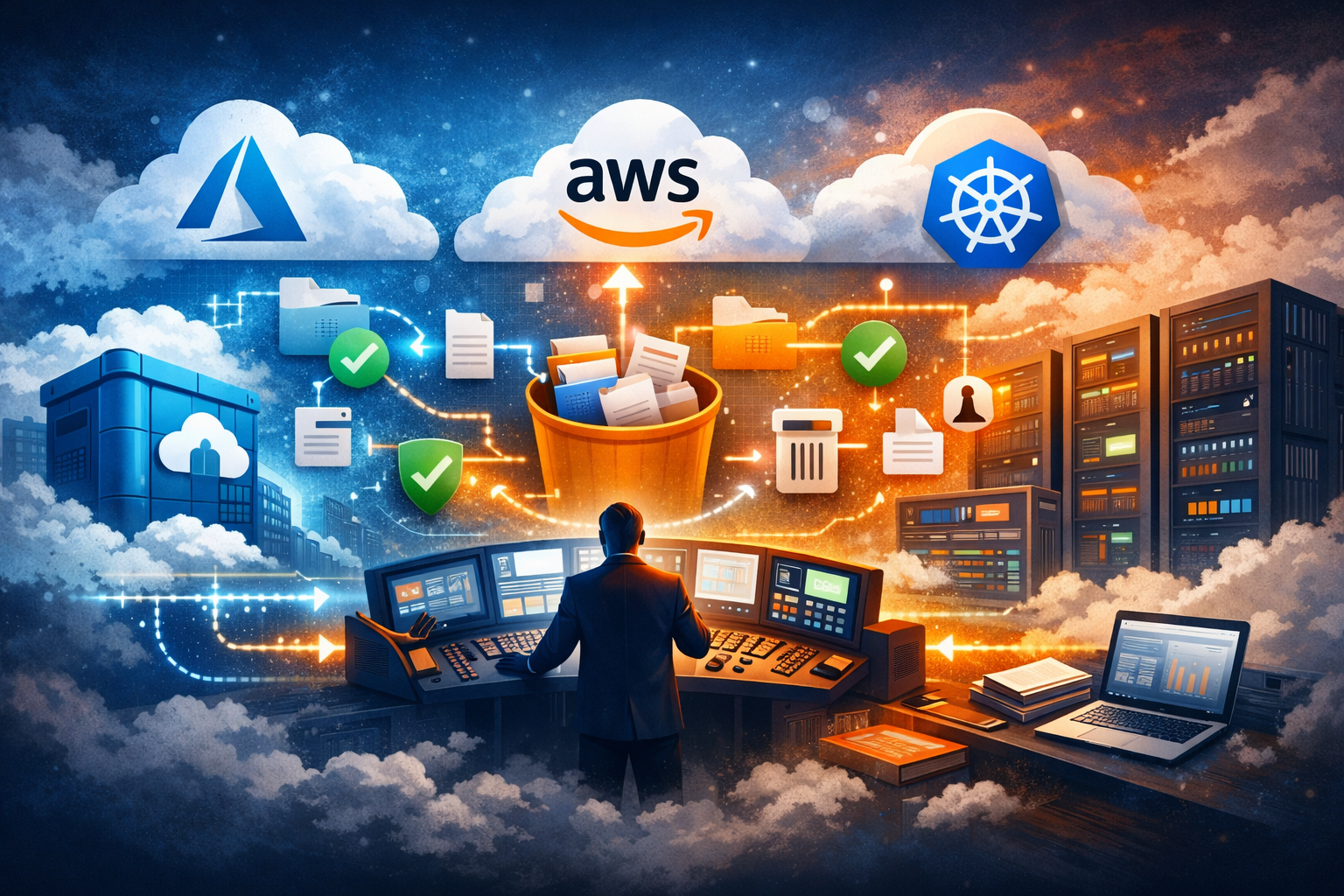
And the visibility is nil, whether you’re talking triggering an Airflow deck from a file appearance in an S3 bucket to incident management to SLAs.
“The requirement that changes is that these new technologies will have fewer considerations for day-to-day operations,” said Kellermanns. “I think they’ll also have fewer considerations for the end-to-end business flow itself.”
The Business Wants It Yesterday. And They Mean It

Let’s face it, no matter where you decide to park your workloads – in a data center, the cloud, or on some production server under your desk (again, another consulting story as this actually happened, and the guy had coffee on his desk!) – the business doesn’t really care.
They just want it done, like, already.
They want the cloud’s magic – lower costs, more flexibility, and zero delays – and the’re getting more intolerant of old-school stuff incident management and SLA predictions.
In the end, it’s all about making it fast, robust, and cheap, whether it’s on-prem, hybrid cloud, or even serverless.
But no pressure.
Where the approach needs to change

So developers have to juggle different interfaces, different technologies, and weave the chaos into a smooth process.
Take a typical workflow.
It starts with an old-school task in SAP on-prem, then suddenly – boom! – it’s off to the cloud (S/4HANA) or some fancy SaaS app.
In the past, you might’ve script-hacked it together, but now?
You gotta integrate.
That means jumping over to the Automation Marketplace for whatever you need – ERP apps to cloud services, and drag, drop, point, or click, and download.
If you haven't checked this place out, you need to do it! (the Automation Marketplace)

Simply set up an agent, tell it where your Automic instance lives, hit start, and pop the bubbly. Why? Because you just met the business integrations needs at the click of a button.
Ok, maybe you’ll need to add it to the service manager first, Kellermanns joked, but that’s about as hard as it gets.
Once it’s all set, integrating new tech is a breeze. You can even peek into Airflow, see what DAGs your developer’s been cooking up, and run them right away. You’ll get visibility into tasks, outputs, and can pass parameters between tools like a file name from one system to another.
And the best part? Your developers get the same view – everyone’s in on the action, no matter the tech. Whether it’s AI/ML, data pipelines, or any vendor tool, you’ve got that magical connection without needing to whip out your Python skills.
One Workflow to Rule Them All

The complexity is real. The good news is, it’s easy to navigate.
The workflow becomes your trusty canvas again, where you design business processes without worrying about tech locations or vendor differences.
With an added bonus: abstraction.
Airflow’s the current MVP for ETL, but in a year or two, let’s say Prefect or Dagster takes over. No sweat. You can swap out Airflow for Dagster, and everything else – your business processes, incident management, SLAs – behave like nothing changed.
AAI for spontaneous twerking

Now, Broadcom would be remiss if they didn’t take every opportunity to mention AAI (Automation Analytics and Intelligence), so Kellermanns did.
Its predictive alerts, critical path detection, and ticketing integration is known to call people to their feet. It’s way easier to run down a critical-path here than in Automic or Apache Airflow.
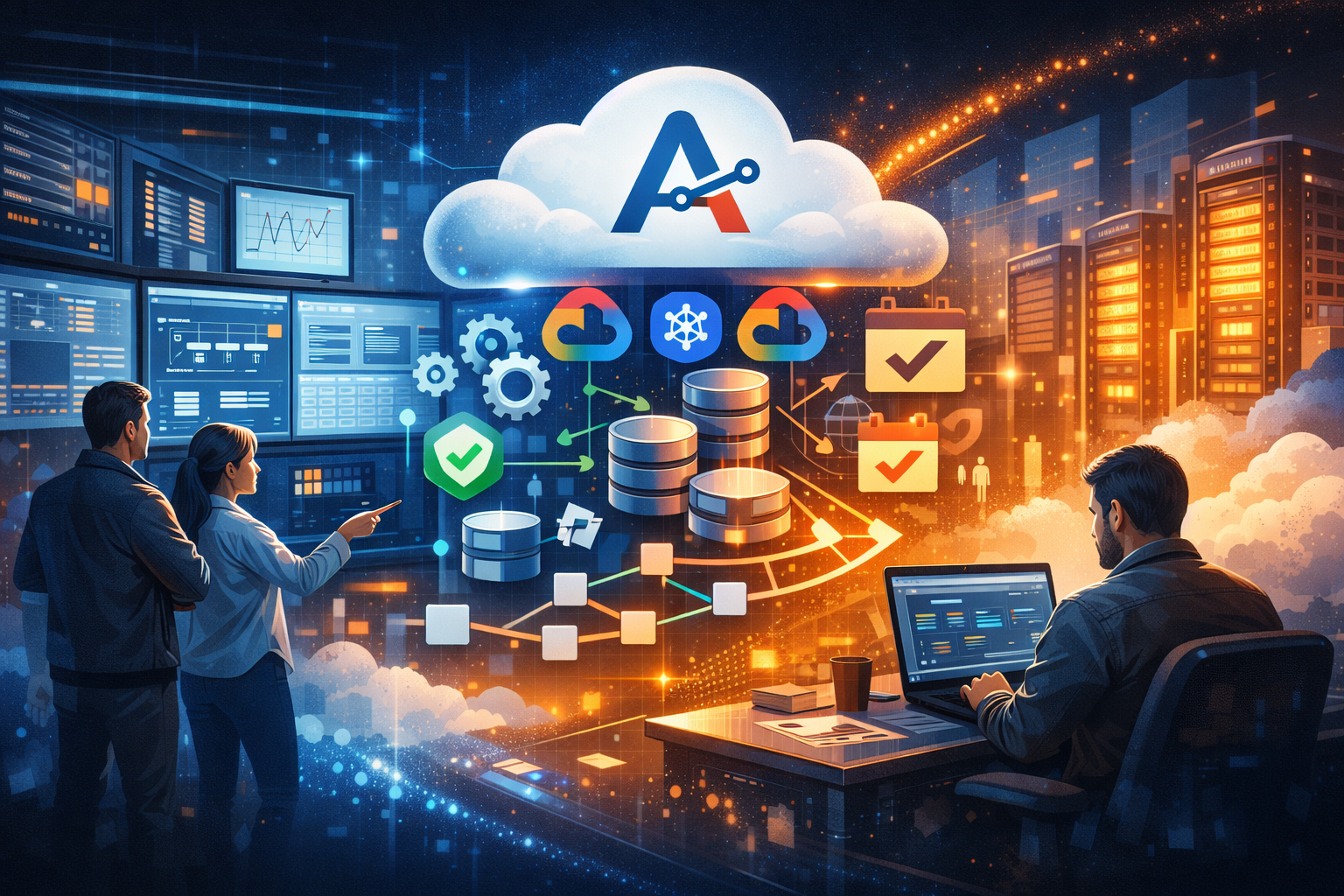
And when you see AAI’s views into Databricks, Data Fusion, BigQuery, and Airflow DAGs, twerking may erupt from your lower half.
But don’t throw out your back.
Over,
Bob