
I hear this all the time from teams who live inside AutoSys every day: “Honestly? It’s just easy.”
Not “easy for a complex enterprise tool.” Not “easy once you survive onboarding.”
Just… easy.
And in an era where every new platform wants you to sacrifice a weekend, a sanity point, and possibly a small goat just to get started, “easy” is basically a superpower.
Which is good, because IT operations is already doing a high-wire act. The business wants 24×7 service delivery, real-time analytics, and flawless customer experiences … while teams juggle ballooning workloads with limited resources across an ever-spicier mix of platforms, ERP systems, and cloud everything.
That’s where SOAPs (Service Orchestration and Automation Platforms) step in. Tools like Broadcom’s AutoSys take on the heavy lifting: streamlining mission-critical processes across hybrid environments, cutting complexity, reducing costs, and keeping essential services running reliably (yes, every hour of every day, even on holidays).
What this briefing covers
I’m looking at AutoSys through that exact lens: a Workload Automation platform that’s quietly powering high-volume, complex environments. Hundreds of the world’s largest enterprises already lean on it to operationalize workloads, maintain availability, and respond to real-time business events.
Myth-busting time
Some competitors try to paint AutoSys as “legacy,” and when that sticks, it’s only because the product team spends more time evolving the platform than marketing it. That claim has never been true. AutoSys delivers all six core SOAP automation capabilities, and Broadcom continues to push it forward for cloud-native workloads, real-time automation, and modern enterprise demands.
If you still hear that old smear campaign (that AutoSys is just a job scheduler from another era, built for payroll runs and nightly reconciliations, and somehow “not ready” for real-time, event-driven workflows) take it with a grain of salt.
Truth? That claim has never held up. AutoSys has spent years proving it can operationalize complex workloads across distributed systems, ERP environments, and the cloud. And today, organizations in virtually every industry rely on it to boost availability, automate responses to real-time events, and deliver consistent, reliable service at scale.
One control plane. No more islands.
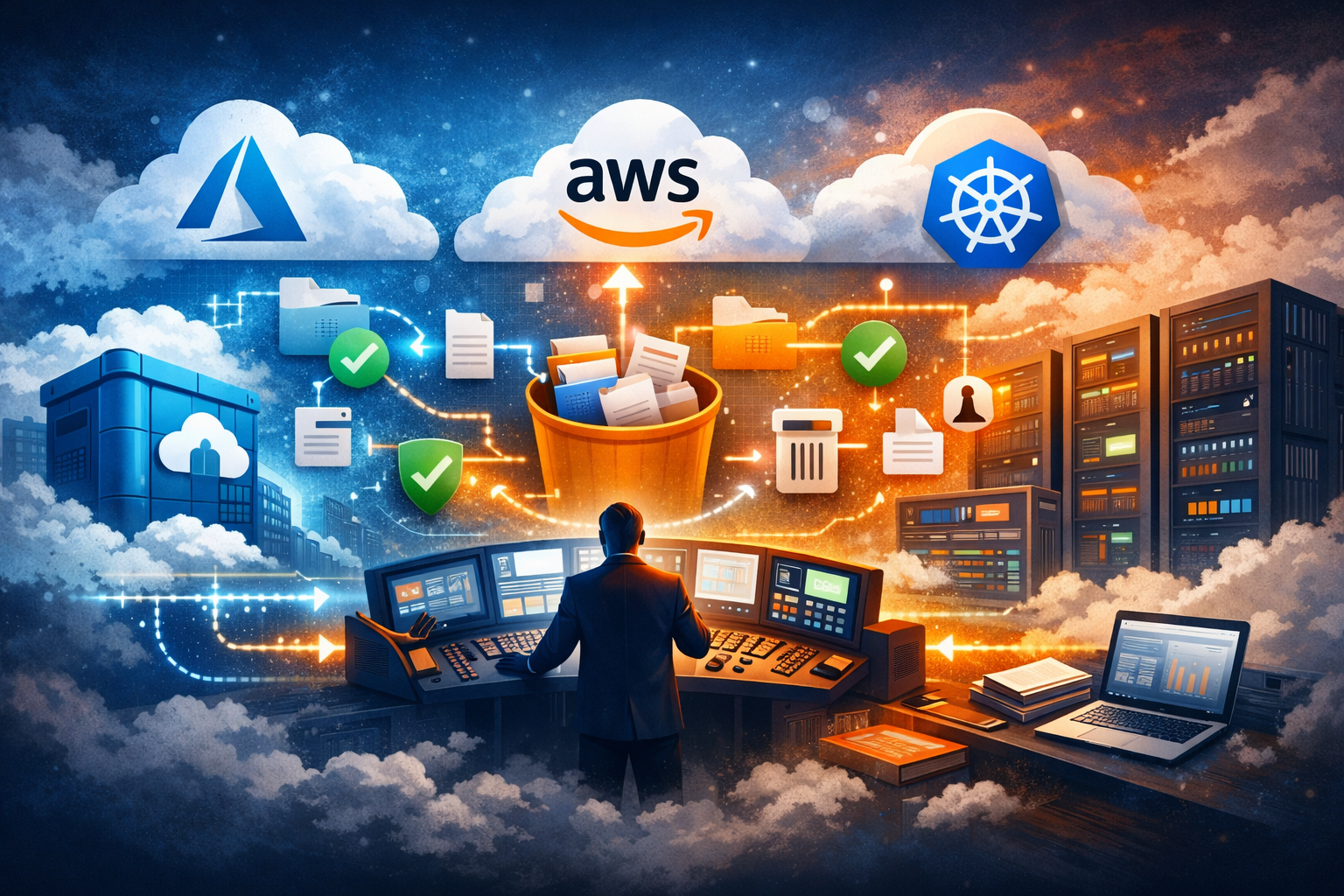
AutoSys gives you one unified automation platform for distributed workloads, business applications, and cloud-native use cases: on-premises or in the cloud. Instead of training teams on multiple platforms and building fragile automation silos, you manage everything in a single place.
You get an intuitive graphical workflow designer, see task inter-dependencies clearly, and connect disparate systems in one view.
Integrations? Out-of-the-box support for SAP, Oracle, Hadoop, Informatica, Peoplesoft … and standard tech like JMS, message buses, SQL databases, file monitoring.
And yes, it plays nicely with cloud services and containers too, avoiding those familiar “islands of
automation” that tend to sneak up and try to trip you.
Real-time value: event-driven automation + proactive monitoring
AutoSys is built for events that matter. With built-in sensors for JMX, JMS, file triggers, IP/process/disk-space monitoring, MQSeries, you name it. It catches an input, checks it against rules and policies, and executes the right action. No more guessing or artificial start times.
Plus? ML-powered insights that surface issues before they impact your service levels. Real-time critical-path views and dashboards blending performance metrics with SLA data meaning your team can detect, respond, and fix faster.
Self-service for the business. Governance for IT.
Here’s the win-win: business users, devs, analysts, they get some of the control they want, via self-service UI or APIs. Meanwhile, IT retains control via role-based access, policy-driven workflows, security, and audit trails.
Result: IT becomes more responsive and productive. Business units gain independence without chaos. Month-end, data science, server reboots, password resets – all handled cleanly and safely.
Cloud, containers, data pipelines—and tomorrow
When demand spikes or drops, you need automation that keeps pace. AutoSys automates provisioning of Kubernetes, OpenShift, multi-cloud resources. It integrates with Terraform and other cloud-infra tools for staging, testing, production environments.
On the data side: AutoSys orchestrates pipelines for Databricks, Azure Data Factory, Hadoop jobs, SQL statements: ingest, transform, analyze data … even support ML model-training workflows.
Future-proof? Yes.
How AutoSys Delivers on the Six SOAP Criteria
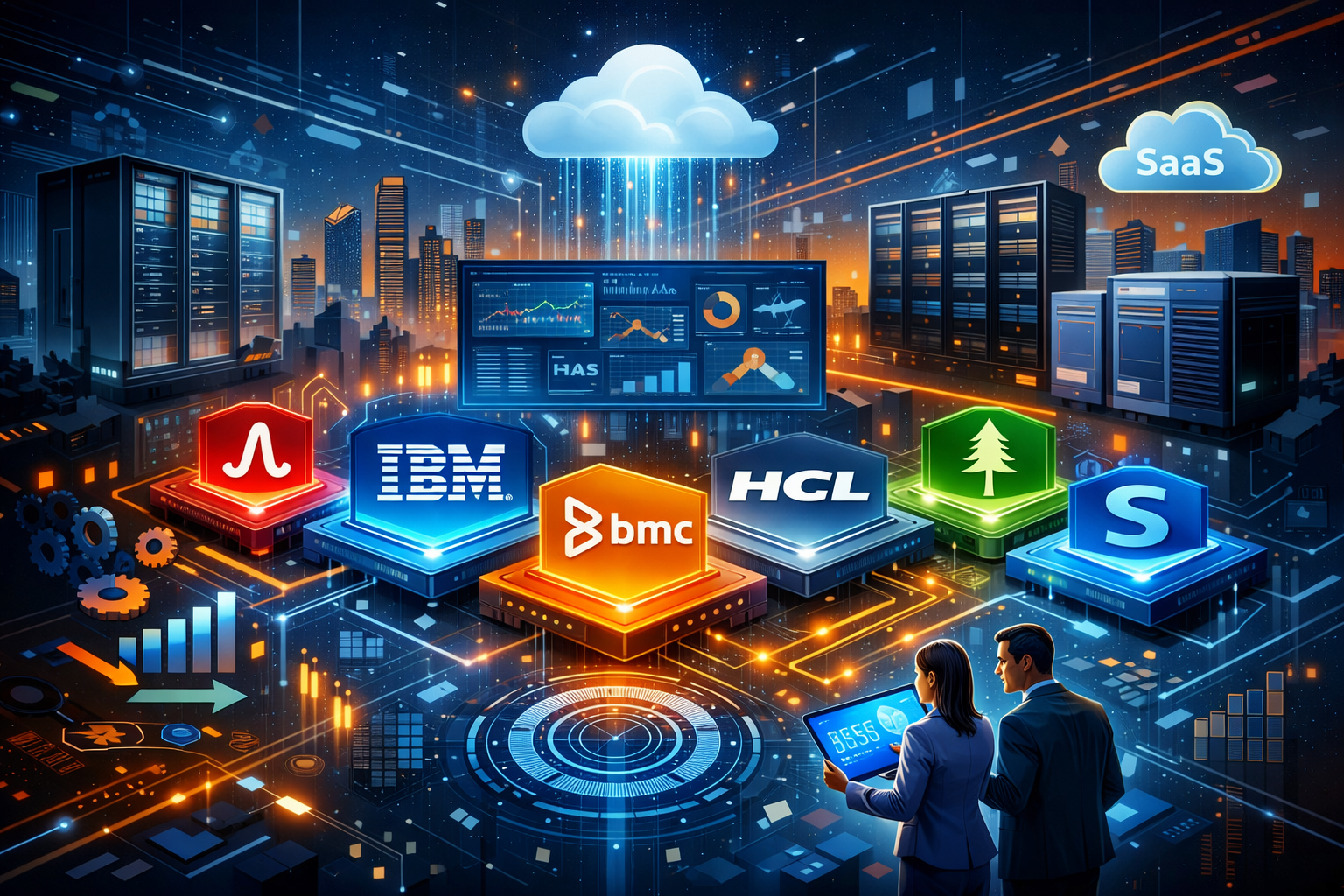
SOAP platforms are often defined by six core capabilities, and AutoSys hits every one of them. Here’s how it maps cleanly to the full framework:
1. Converged automation platform
AutoSys gives you one central automation layer that unifies classic workload automation, job scheduling, and modern orchestration across hybrid IT. Instead of stitching together separate schedulers, scripts, and cloud-native tools, you get a single control plane that spans distributed systems, mainframe, SaaS apps, ERP platforms, containers, and multi-cloud environments. No more islands of automation. Just one place to design, run, and govern everything.
2. Event-driven and API-centric
AutoSys isn’t stuck in time-based scheduling. It natively supports event triggers, webhooks, REST APIs, and real-time signals from applications, cloud services, and infrastructure. Whether it’s a file drop, a message bus event, a Kubernetes update, or a service desk ticket, AutoSys can start the right workflow instantly. It also integrates smoothly with DevOps, CI/CD pipelines, ITSM tools, and cloud platforms, so automation fits naturally into the way teams already work.
3. Supports complex, end-to-end workflows
This is where AutoSys shines. It orchestrates multi-step, cross-domain business processes that span applications, data pipelines, infrastructure automation, and cloud-native services. AutoSys handles dependencies, SLAs, retries, notifications, and error handling automatically, giving you reliable, end-to-end workflows even in highly heterogeneous environments.
4. Self-service and democratized usage
AutoSys offers role-friendly interfaces: graphical workflow design, templates, catalogs, APIs, and policy-driven controls—so developers, operations teams, and business technologists can contribute without becoming scheduling experts. Meanwhile, IT keeps governance intact with RBAC, audit trails, approvals, and guardrails that prevent automation chaos. The result: more autonomy for teams, less backlog for IT, and a whole lot more speed.
5. Analytics, observability, and optimization add-ons
AutoSys provides deep visibility into workload health, critical paths, performance trends, and SLA risks through add-on reporting tools. You have to install iDash or AAI for real-time dashboards, customizable reports, and SLA monitoring that helps teams spot issues quickly. Add in ML-driven insights and predictive capabilities, and AutoSys can help you tune schedules, optimize capacity, and catch problems before they impact your business.
6. Scalable, resilient architecture
Enterprises run AutoSys because it scales: globally. It’s built for high availability, large job volumes, geo-distributed environments, and strict governance. You get strong security, multi-tenancy/segmentation options, disaster recovery support, and lifecycle management built for enterprise-level requirements. Whether you’re running a few thousand jobs or millions, AutoSys holds up.
So … is AutoSys worth it?
If your environment spans platforms, ERP systems, cloud services … and you need efficient, consistent, and reliable service delivery, then absolutely, yes. You get one automation platform for distributed, business-application, and cloud use cases, with a modern UI and broad integrations that eliminate automation islands.
And if you’re scaling fast, optimizing resources across physical, virtual and multi-cloud infrastructure, or orchestrating data pipelines for analytics/ML, AutoSys is built for that.
RMT can help
We can help you evaluate whether AutoSys fits your environment, and if it does, we’ll help you unlock its full value. Start the conversation below.