One Resource, Every Answer: Evaluating DBA & SOAP Platforms in Insurance Services

September 25, 2025

AT A GLANCE

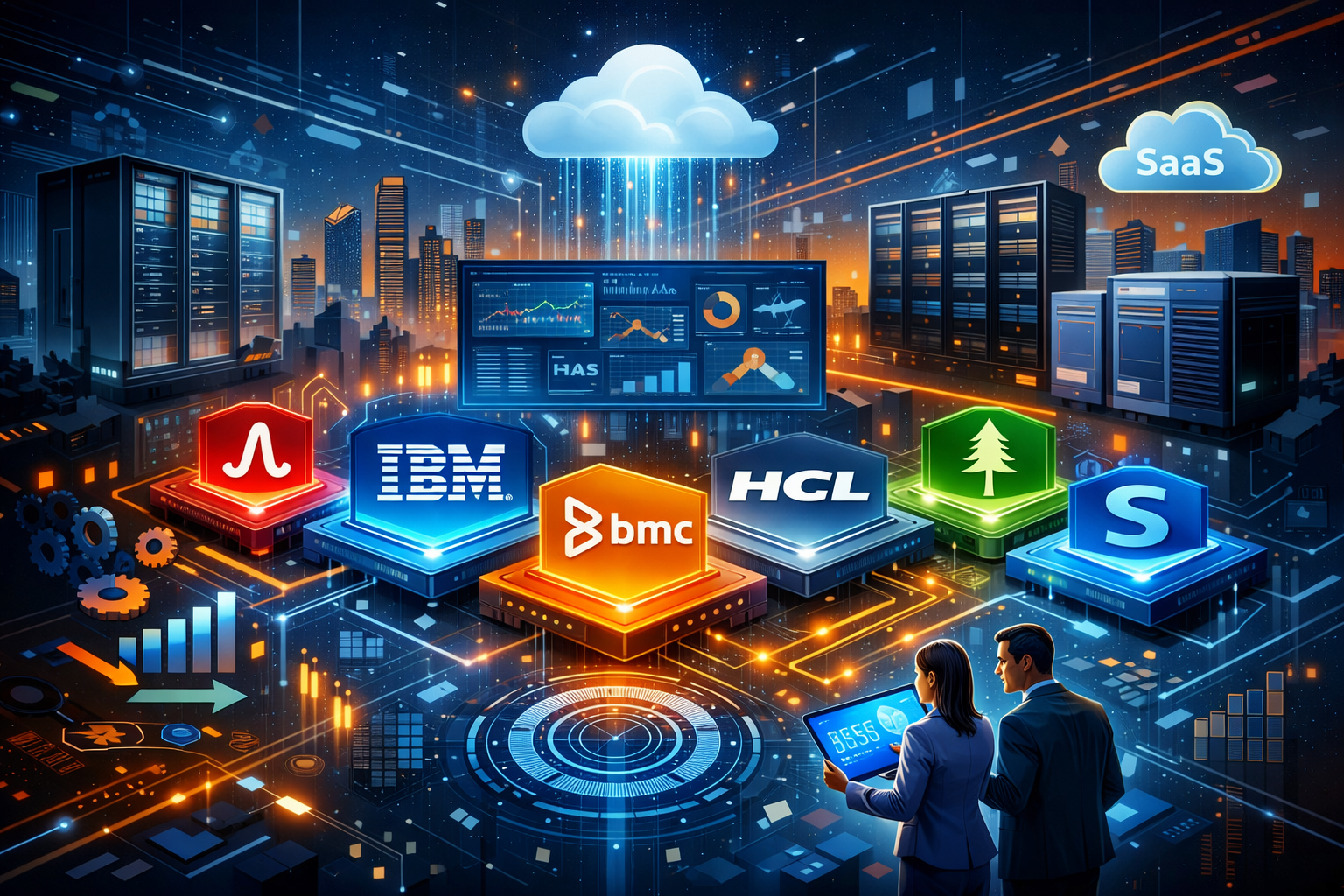
  • Automation Decisions Insurers Revisit: Migrate off mainframes, adopt SaaS, consolidate legacy schedulers, upgrade outdated tools, and run due diligence. Assess the Gartner SOAP Leaders: Broadcom Automic/AutoSys, IBM IWA, BMC Control-M, HCL Automation Orchestrator Suite, Stonebranch UAC, and Redwood RunMyJobs.
  • Go Beyond the Quadrant, Verify What Matters: Check NAIC, NAICOM, PCI-DSS, and privacy compliance; demand migration playbooks; confirm true SaaS, not hosted legacy; review audit controls and multi-client isolation; test integrations with policy, claims, actuarial, and external APIs; model total cost and support quality. Use the cheat sheet: scalability, cloud-native, AI-driven self-healing, user-friendly experience, transparent pricing.
  • Modernize for an Edge, Then Scale Innovation: Upgrades help teams do more with less and shift focus from maintenance to expansion, align with “say goodbye to manual drudgery,” and reflect McKinsey’s 25 percent cost-cut figure that RMT steers with disciplined agility.

Navigating the Digital Shift in Insurance Services

You’re in the right place if you’re considering mainframe migration, moving to SaaS, consolidating legacy systems onto a SOAP (Service Orchestration and Automation Platform), or exploring how traditional job scheduling has evolved into powerful Digital Business Automation (DBA) that orchestrates your entire IT ecosystem. 

Our 2025 white paper, Inside the Gartner SOAP Leaders (free for a limited time), is the single source for everything you need to evaluate and modernize automation strategies for insurance services. 

You’ll get vendor comparisons from Gartner’s Leader quadrant, SOAP comparisons, challenges, evaluation criteria, and years of hands-on experience consolidated into 32-pages. 

We go beyond the Gartner SOAP Magic Quadrant to share what truly sets automation platforms apart for most insurers, including security, compliance, scalability, cloud readiness, and integration flexibility with legacy policy, claims, and billing systems.

In this white paper, we share direct, detailed comparison of key differentiators among leading solutions – 

  • Broadcom (Automic, AutoSys),
  • IBM (IWA),
  • BMC (Control-M),
  • HCLSoftware (Automation Orchestrator Suite),
  • Stonebranch (UAC), and
  • Redwood (RunMyJobs)

– so you can see which features and strengths matter most for your industry.

Instant Download - Free for Qualified Insurance Leaders

Common Scenarios Driving DBA & SOAP Evaluation

  • Migrating off Mainframes: Shift away from aging and expensive mainframe systems toward distributed, cloud-native, or hybrid environments for agility and cost savings.
  • SaaS Adoption: Embrace SaaS-based SOAPs for elastic scaling and rapid innovation while meeting the strictest compliance requirements.
  • Consolidating Automation Tools: Reduce overhead, unify controls, and eliminate risk by merging multiple legacy schedulers and Workload Automation solutions.
  • Upgrading Legacy Tools: Replace outdated automation platforms to minimize failures, improve integration, and support digital-first business models.
  • Due Diligence & Research: Gather in-depth, independent analysis that goes beyond standard market quadrants – key for regulatory review, board buy-in, and risk mana

Why Standard Analyst Reports Aren't Enough

While Gartner’s Magic Quadrant for SOAPs is an essential starting point, insurance institutions need deeper, more nuanced guidance:

  • Industry-Specific Compliance: What’s the real track record of SOAP vendors with NAIC, NAICOM, PCI-DSS, and global insurance data privacy regulations?

  • Migration Playbooks: What are the hidden challenges in mainframe-to-on-prem-to-cloud migration, and how does each SOAP support phased transformation in insurance workflows?

  • SaaS Maturity: Are “cloud-enabled” solutions truly SaaS, or are they just hosted legacy tools rebranded for insurance companies?

  • Risk & Security Assessment: Which SOAPs offer the strongest audit controls, multi-client data isolation, and incident response capabilities?

  • Real Integration Experience: How do the leading platforms perform at integrating core policy administration, claims management, actuarial data, and external APIs? We’ve seen them in action.

  • Cost & ROI Modeling: What hidden costs arise from licensing complexity, training, false starts, or bolt-on modules?

  • Customer and Support Quality: Beyond demos, who’s delivering business value and responsive support to leading insurers and web aggregators?

The reality is that Service Orchestration and Automation Platforms (SOAP) modernization – and the evolution of Workload Automation into broader Digital Business Automation – isn’t just about stability or avoiding end-of-support. It represents a holistic shift in capability.

When an organization modernizes solutions across the board – whether databases, workload automation, or any of the 100+ applications that touch daily operations – it’s not playing catchup anymore; it’s gaining a competitive edge. 

Competitors who sit two versions behind are missing features that allow others to do more with less. Multiply that across every application, every workflow, and the culmination is immense. Each upgraded piece isn’t just stronger on its own – it fuels the whole organization to move faster, smarter, and ahead of the industry curve.

With modernization complete and that competitive edge in place, the organization can shift its focus beyond maintaining the foundation to scaling innovation. Freed-up resources can now be redirected toward expanding automation into other areas of the business, advancing new strategies, and increasing impact. That’s when an upgrade becomes more than a technical milestone – it becomes a pivotal moment for transformation.

Combine those habits with the goal we share with Broadcom to “say goodbye to manual drudgery,” and, backed by McKinsey’s 25 percent cost-cut figure, we turn talk into measurable savings.

This balance of agility and discipline is why clients trust RMT to guide their most critical automation initiatives.

5 Questions for Your DBA/Automation RFI

  1. How does this SOAP platform support insurance-specific compliance and audit requirements?

  2. What’s the average timeline, resource lift, and technical debt involved in migrating off a mainframe or legacy scheduler?

  3. Does the solution offer true SaaS – and if so, how does it ensure data residency and failover while meeting stringent insurance data protection standards?

  4. What degrees of self-service automation and low-code enablement are available for diverse claims, underwriting, and administrative insurance teams?

  5. Can the automation suite reliably scale across distributed, hybrid, and multi-cloud insurance IT architectures with centralized governance?

How to Choose Between the Gartner SOAP Leaders

When it comes to selecting a Service Orchestration and Automation Platform (SOAP) in the highly regulated and fast-moving world of insurance services, there’s no room for guesswork. Here’s your industry-specific cheat sheet to guide your due diligence – and a direct invitation to access our white paper for in-depth, unbiased comparisons and expert guidance.


Insurance Services SOAP Selection Cheat Sheet

✔ Enterprise Scalability
Will the platform support secure automation across thousands of workflows, multiple business units, and rapidly evolving compliance demands – or will it stall when volume spikes?

✔ Cloud-Native Architecture
Is the solution purpose-built for hybrid and multi-cloud environments – delivering reliability, regulatory compliance, and robust security controls? Or is it simply a legacy product in a new wrapper?

✔ AI-Driven Insights & Self-Healing
Does the platform offer proactive anomaly detection, intelligent remediation, and the audit trails required for regulators? Smart automation isn’t a luxury – it’s a must for uptime and risk mitigation.

✔ User-Friendly Experience
Can your compliance, operations, and IT teams automate critical processes without a steep learning curve or extensive coding? Look for intuitive interfaces and role-based controls.

✔ Transparent, Predictable Pricing
Avoid hidden fees – ensure user, workload, and cloud expansion costs are clear from day one. Financial planning demands it.


Ready For Deeper Vendor Evaluations?

These are the must-ask questions – but true differentiation comes down to how platforms address insurance-industry challenges like auditing, data privacy, mainframe integration, and regulatory reporting.

Unlock our comprehensive white paper to get:

  • Detailed side-by-side vendor analysis just for insurance services

  • Migration and ROI insights not found in standard analyst reports

  • A checklist for compliance, risk, and security questions you won’t find anywhere else

Download the exclusive white paper free (for a limited time) and future-proof your institution’s automation strategy.

RMT: Expert Guides

Digital Business Automation isn’t something you slap on like a sticker. It’s a journey – and you want someone who knows the terrain. That’s us.

At RMT, we:

  • Help you pick the right platform (no vendor fluff, just facts).
  • Get you up and running without disrupting your business.
  • Train your team so they don’t just use the tool – they master it.
  • Stick with you long after go-live, tweaking and optimizing as you grow.

We’re here for the long haul. 

LIMITED AVAILABILITY

Instant Download - Free for Qualified Insurance Leaders

[FREE GUIDE] 5 Ways to Choose the Right SOAP: Inside Gartner’s SOAP Magic Quadrant Leaders

Looking for the best automation platform for your enterprise?

This 32-page white paper dives deep into Gartner’s 2024 Magic Quadrant for Service Orchestration and Automation Platforms (SOAPs). We analyze the strengths, weaknesses, and roadmaps of each Leader – Broadcom Automic, IBM Workload Automation, BMC Control-M, Stonebranch, Redwood, and HCL Software – so you can choose the right fit for your Digital Business Automation (DBA) strategy.

You’ll Learn:

  • Behind the Scenes Info on the 6 Leaders in Gartner’s 2024 SOAP Magic Quadrant: Get a side-by-side comparison of Broadcom, IBM, BMC, Stonebranch, Redwood, and HCL – based on capabilities, vision, and customer impact.

  • RMT’s Real-World Vendor Insights: Discover what Gartner doesn’t tell you: our take on vendor stability, support quality, roadmap risks, and product performance in the field.

  • 5 Key Factors to Evaluate SOAP Platforms
    We break down what to consider – scalability, AI features, ease of use, integration, and licensing – so your platform grows with your business.

  • 3 Recommendations to Build a Winning DBA Strategy
    Learn how to align IT and business goals, foster self-service automation, and drive real ROI from your automation investments.

  • The 6 Pronged Evaluation Framework 
    Learn how to optimize automation decision-making.

Planning a SOAP evaluation?
Download RMT’s free white paper (free for a limited time) and make the smartest move for your automation future.

More in Workload Automation (WLA)

Not sure what fits your business needs? Get free consultation!

Managing Workload Automation environments is all we do, and we do it well. We’re happy to help.

In this article:
Below are side-by-side comparisons of the top Gartner Magic Quadrant leaders and key platforms, focusing on their differentiators, strengths, and notable limitations for regulated environments.
Share on social media:
LinkedIn