Considering using your automation upgrade as an opportunity to move from Automic On Prem to SaaS? We’ve got what you need. The basics are below, but for a deep dive, you’re gonna want to check out our white paper on Automic SaaS Best Practices and Pitfalls.
Enterprise automation isn’t what it used to be. What started as batch jobs now stretches across hybrid cloud and microservices.
Automic leads the pack, recognized by Gartner for stitching mainframes to containers. But while on-prem Automic gives you total control, it’s a lot of responsibility. Enter: Automic SaaS – same muscle, less maintenance.
Moving to SaaS? Think beyond infrastructure savings:
Total cost of ownership includes more than hardware. Measure people hours, downtime, and compliance risks. Then, prep your internal environment:
Document job volume, user counts, critical paths, SLAs – anything that might bite later. Oh, and don’t skimp on a Project Manager. Someone needs to steer the ship.
Trade-off? Less control, more peace of mind. You’ll adapt.
Then deploy agents with certs/tokens and test with dummy jobs. Port integrations over (or rebuild them cleanly if needed). Define user roles early, not as an afterthought. Apply folder structure discipline and clean house while you’re at it.
Documentation isn’t optional.
Training guides, escalation paths, how-to logs – future you will thank you.
Solutions:
Shift your operations mindset. You’re not rebooting boxes anymore – you’re managing service escalations.
We go deep into the challenges orgs face in our white paper: Automic SaaS: Best Practices and Pitfalls, available here.
Run retrospectives. Look at success rates, time savings, staff workload. Keep an enhancement backlog. Adopt self-healing workflows when you can.
With SaaS, you can achieve better ROI.
Want to know more about how to navigate a move to SaaS? Check out our white paper here.
Robert Mark Technologies has implemented Workload Automation 1,500+ times. We’ve helped giants like Nike and Netflix get it right. Our four-phase method (discovery, planning, execution, optimization) keeps things smooth.
Extras include:
You can outsource the hard stuff or use us as an extension of your team. Either way, your automation matures alongside your business.
Going SaaS isn’t just tech – it’s a mindset. Prep well, document everything, and embrace the new model. With RMT in your corner, your Automic upgrade won’t just work – it’ll win.
The RMT Difference: We’re not just consultants – we’re your automation sherpas. We’ll guide you through the upgrade wilderness with the confidence of someone who’s made the trek 1,500+ times (and counting).
Book a free feasibility discussion. We’ll get the lay of the land, in terms of your scope, compatibilities, and existing systems and workflows.
Then we’ll erase your concerns about disrupting business critical operations.
Don’t wait for your environment to drop passive-aggressive hints about its retirement. Let’s plan your upgrade today.
The countdown is on! With Automic v21 reaching its End of Service this September, now is the time to upgrade. In this live webinar, we’ll guide you through your upgrade options, help you choose your upgrade path, and share essential best practices to ensure a smooth transition to v.24 (On Prem or SaaS).
Don’t wait until it’s too late – watch now to ensure your app stack stays optimized with Automic.
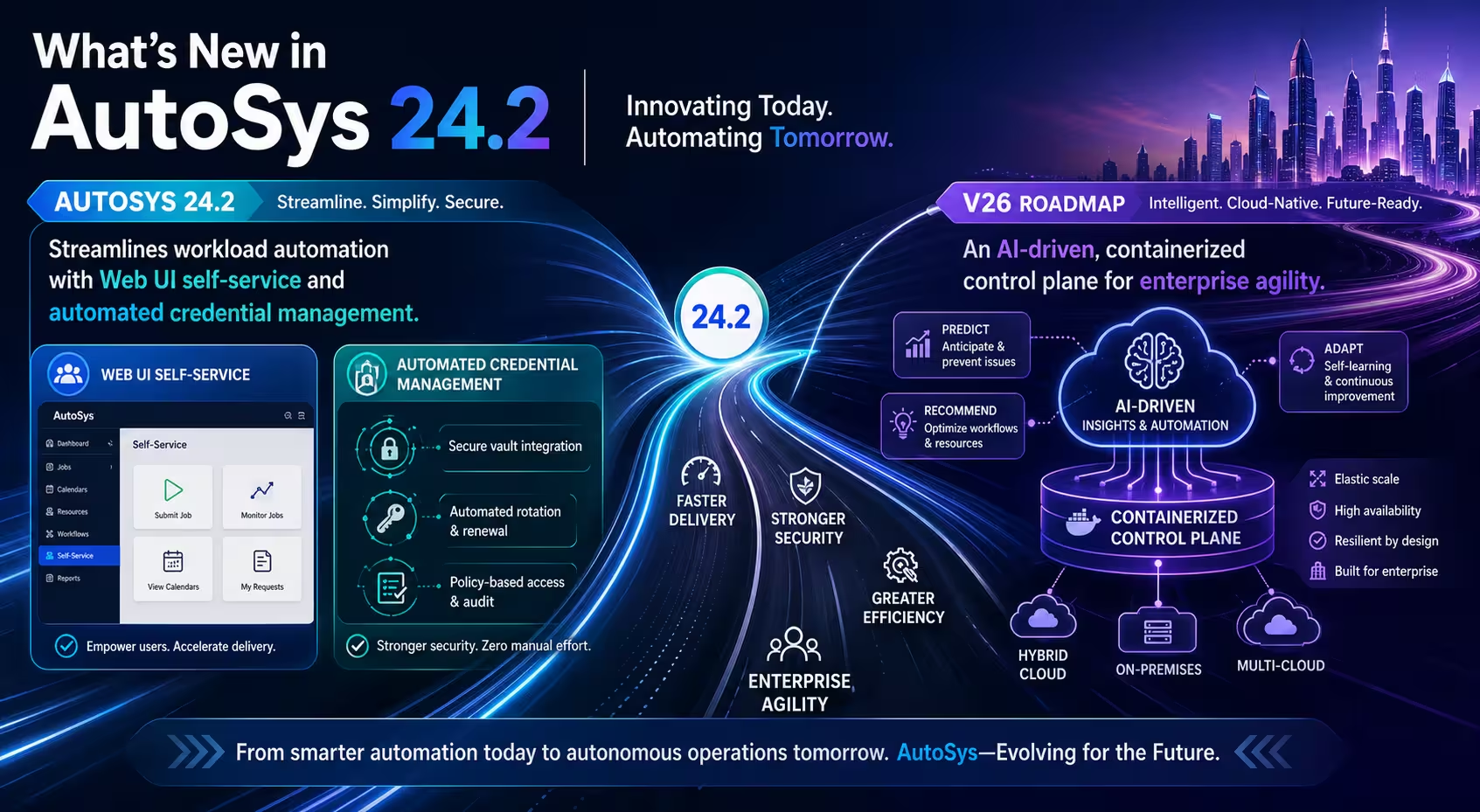
Recommended Reading: What’s New in Automic v.24: The Transition You Can’t Miss
Managing Workload Automation environments is all we do, and we do it well. We’re happy to help.