

AT A GLANCE
- AI Momentum and Scale: 98% plan new AI deployments over the next 12 months. Agentic AI follows suit, with 42% already in production and 40% planning. 86% expect multiple agentic AI solutions, and about 48% foresee running four or more platforms within 24 months.
- Orchestration on the Roadmap: 93% plan to use orchestration to manage agents and data. 33% already run an orchestration solution, and 60% plan to add one, which aligns with a move to centralize data pipelines.
- Data Work That Moves the Needle: Teams prioritize data processing, refresh, and real-time status, while many also need ingestion, movement, and auto-reconnect. 85% struggle to extract data from mainframe, ERP, CRM, and supply chain sources.
- Performance, Accuracy, and KPIs: 96% say weak pipelines hurt AI objectives, including accuracy, delays, wrong or outdated outputs, security risks, and compliance issues. 69% rank pipeline performance as a top or high priority, track reliability, errors, resiliency, and data velocity, and spend significant time on tools.
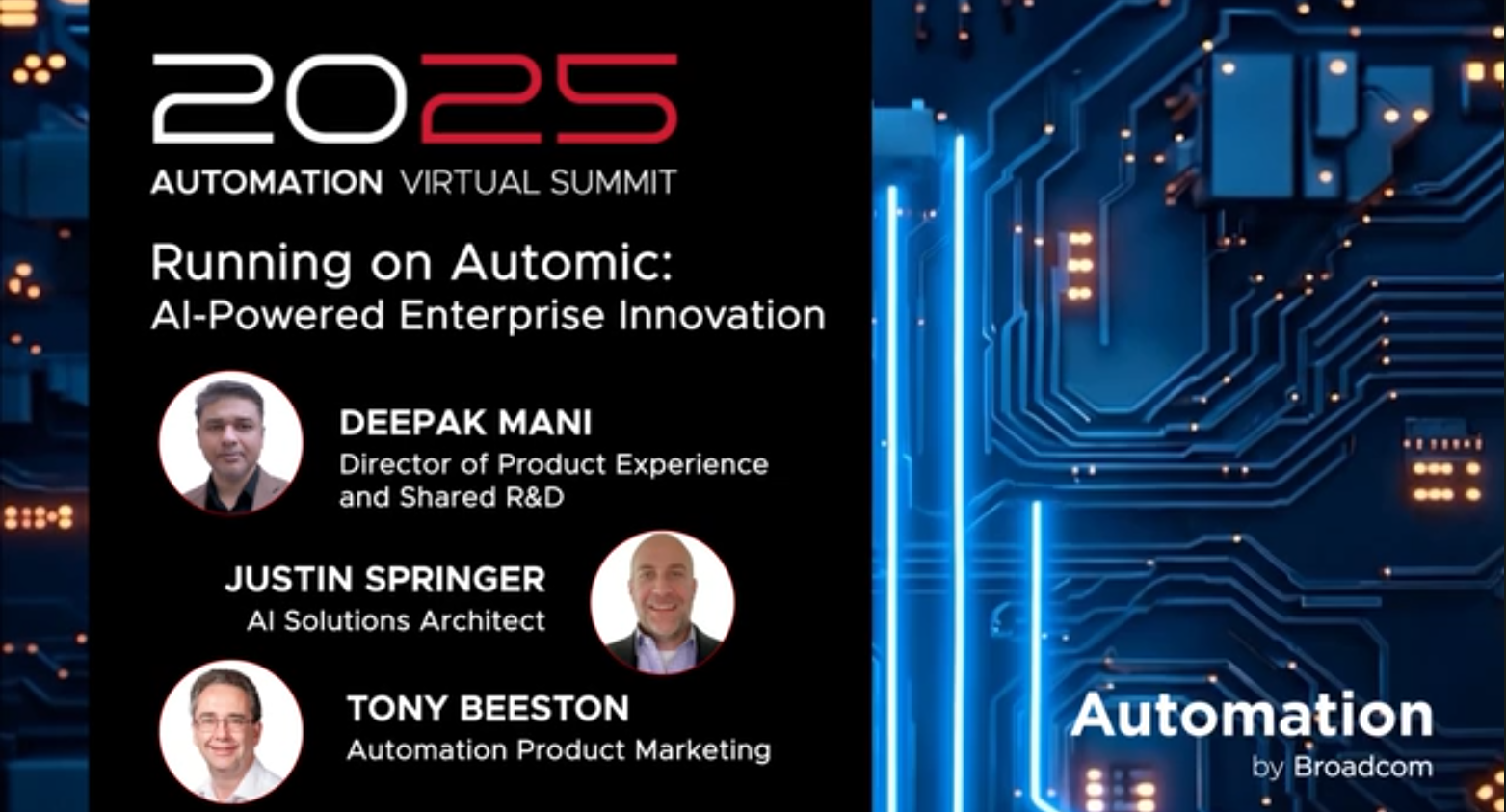
In this session from Broadcom’s 2025 Automation Virtual Summit, David opened with a blunt reminder: “we don’t do research for research’s sake. We do it to drive decisions.”
His team surveyed 530 AI and data professionals to gauge momentum, roadblocks, and how data timeliness affects AI.
Participants ranged from team members to executives across North America and Europe, giving a 360-degree view of strategy and execution.
So, what did the numbers say?
AI investment continues, agentic AI gains traction, and pipelines, quality, and orchestration decide outcomes.
I’ll weigh in as we walk the findings, but first let’s let the data speak.
Agentic AI Is Here – and It Multiplies Complexity
The data says “agentic AI is the new hot form of AI,” and teams plan to use it to “run around and try to solve problems” across departments.
Plans are not theoretical. 98% plan to deploy agentic AI, with 42% already in production and 40% planning. Momentum creates scale, and scale creates moving parts.

Next, complexity spikes. 86% expect multiple agentic AI solutions, not one tool to rule every use case. Looking 24 months ahead, about 48% expect to run four or more AI platforms, and some even expect more than 10.
That tracks with what I see daily. Different business tasks demand different solutions, which means more integrations, more sequencing, and more chances for outages if you do not align the work.
Finally, talent and risk bring constraints. Skill sets top the challenge list, with security close behind. Then the data work shows up everywhere. Quality, access to legacy systems, governance, and data pipelines all shape results.
If you plan to expand agentic AI, plan for the operational complexity that comes with it.
Why Orchestration Becomes Non-Negotiable
I look at the numbers and move. “The hype phase has already passed,” and 98% plan new AI while 98% plan agentic AI. Complexity rises as 86% expect multiple agentic solutions and about 48% expect four or more platforms within 24 months.

So, teams need control. “93% of the companies are planning to use an orchestration solution,” with 33% already running one and 60% planning to add it.
The goal stays clear: coordinate agents and the data they consume, and keep quality and timeliness visible.
Pipelines drive results. 96% report that weak pipeline performance hurts AI objectives, including accuracy, delays, wrong or outdated outputs, security risks, and compliance issues.
Pipelines: Accuracy, Timeliness, and Visibility
Poor pipeline performance affects AI objectives in 96% of cases, and the pain shows up fast. Projects slip. Accuracy drops. Teams deliver wrong or outdated information.

Risk grows on the security and compliance fronts. So I look at the work that moves the needle. Teams prioritize data processing, plus refresh and real-time status.
They also call out ingestion, movement, and auto-reconnect. Extraction proves tough too. 85% struggle to pull data from mainframe, ERP, CRM, and supply chain sources.
Leaders respond with measurement. 69% rank pipeline performance as a top or high priority and track reliability, errors, resiliency to change, and the velocity of new data.
Measure What Matters
Teams treat pipeline performance as a priority, with 69% marking it top or high. They track concrete signals like reliability, error injection, resiliency to change, and the velocity of new data.

Momentum also moved beyond the data team, as nearly eight in ten companies use KPIs or OLAs to evaluate pipeline automation.
Tool reality shapes the workday. More than half juggle four or more tools to run data and pipeline automation.
Time follows the sprawl, with 83% spending over 10% of the day on pipeline tools and about 34% spending more than 25%.
Measure the plumbing, then act on it. That protects accuracy and schedules.
What This Means for Enterprise Teams (Action Checklist)
Let’s act on the data:
- Centralize data pipelines and orchestration to manage multiple agentic AI solutions and platforms at scale.
- Automate the highest-value tasks: data processing, refresh cadence, and real-time status. Plan for ingestion, movement, and auto-reconnect.
- Prioritize hard-to-reach sources. Build a path to extract data from mainframe, ERP, CRM, and supply chain systems.
- Protect accuracy. Reduce pipeline delays that lead to wrong or outdated outputs, plus security and compliance risks.
- Measure relentlessly. Treat pipeline performance as a top priority. Track reliability, error injection, resiliency to change, and data velocity.
- Mind the skills gap. Use tooling that offsets limited headcount and reduces time spent maintaining pipeline tools.
How RMT Helps
Whatever tools power your AI today, my team will map the fastest route to orchestrated, high-quality data pipelines for agentic AI.
Book your AI Pipeline & Orchestration Readiness Review.
Just say Bob sent you.




You must be logged in to post a comment.